UNESCO World Heritage Sites mark some of the most awe-inspiring places on Earth…even those that don’t typically make the front page of guidebooks.
Our experts at Hayes & Jarvis have spent years exploring some of the world’s lesser-known—but no less breathtaking—wonders, and now we’re excited to share our favourites with you.
1. India: The Lost City of Hampi
UNESCO World Heritage Site since 1986
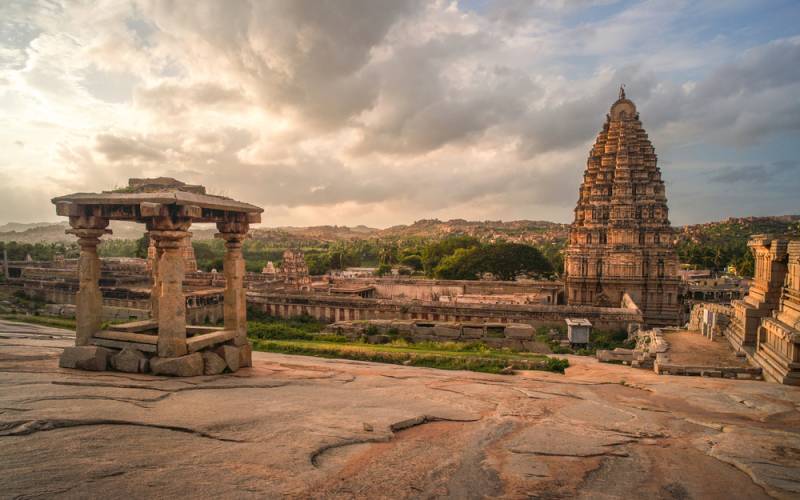
Wandering through the boulder-strewn landscape of Hampi feels almost otherworldly. Scattered across the banks of the Tungabhadra River in Karnataka are thousands of ancient structures—forts, temples, and royal complexes—that tell the story of a mighty empire.
Between the 14th and 16th centuries, Hampi was the heart of the last great Hindu kingdom in South India and one of the largest cities in the medieval world. A stroll of just over a mile along the river will take you past the intricate stone carvings of Vittala Temple, as well as Virupaksha Temple which was built in the 7th century and still serves as a place of worship today.
Do try and time your visit with the sunset. Just a short amble from Virupaksha Temple, Sunset Point on Hemakuta Hill offers a breathtaking view of the surrounding landscape. Bathed in warm, golden light, it’s nothing short of magical.
2. Brazil: The Pantanal Wetland
UNESCO World Heritage Site since 2000
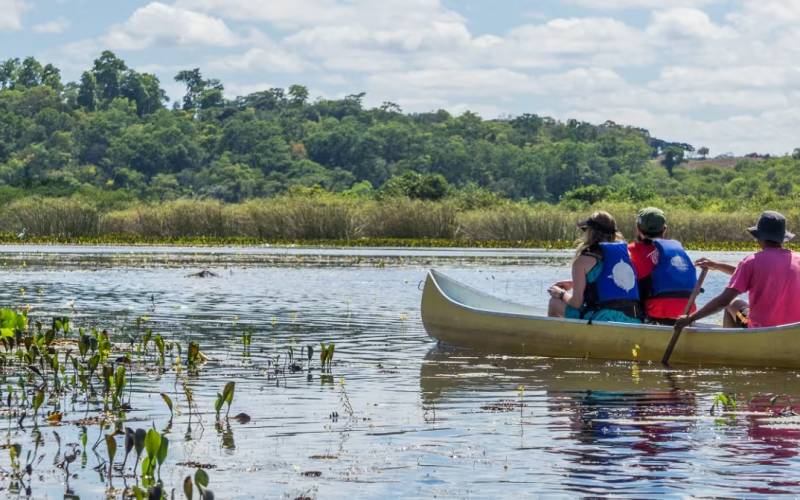
Covering an area nearly half the size of Germany, the Pantanal is one of the world’s largest inland wetlands. And while that may not sound especially appealing at first glance, it’s a natural paradise teeming with biodiversity. Jaguars, caimans, howler monkeys, giant otters, and more than 650 different types of birds call it home.
Indeed, wildlife encounters here can be more frequent and intimate than on many African safaris. Photographers and nature lovers alike will find unforgettable moments in one of the planet’s richest ecosystems.
3. Thailand: Ayutthaya Historical Park
UNESCO World Heritage Site since 1991

Once one of the most prosperous cities in Asia, Ayutthaya was the capital of Thailand (then known as Siam) for over 400 years before falling to Burmese forces in the 18th century. Today, its vast archeological site just north of Bangkok is a hauntingly beautiful reminder of the city’s former glory.
Scattered across Ayutthaya are distinctive prang (towers) sprawling monasteries, and intricate temples, many partly reclaimed by nature. Perhaps most striking is Wat Mahathat, where the roots of a bodhi tree have grown around a sandstone Budda head to form one of Thailand’s most iconic images.
4. The historic villages of Shirakawa-go and Gokayama
UNESCO World Heritage Site since 1996

Tucked deep in the Shōgawa River Valley lie the mountain villages of Ogimachi, Ainokura, and Suganuma. These tranquil, secluded sites are perhaps best known for their traditional 19th century architecture. Done in a style called gassho, the houses feature steep, thatched roofs shaped like hands in prayer.
Built without nails and designed to withstand heavy snowfalls, some of these 19th century homes now serve as traditional minshuku inns. Visitors are welcome to stay with a local family, enjoy home-cooked favourites, hear stories passed down through the generations, and immerse themselves in rural Japanese life.
5. Cambodia: Koh Ker, the Lost City of Lingapura
UNESCO World Heritage Site since 2023

The ancient city of Lingapura was once the political and spiritual heart of the Khmer Empire, only to be swallowed by the jungle. It remained lost to time until the mid-19th century, when explorers rediscovered the ruins of this former capital.
Today, the archaeological site known as Koh Ker includes temples, sculptures, and murals. Most striking is Prasat Thom, a stepped pyramid over 30 meters tall that calls to mind Chichén Itzá half a world away.
Thanks to its recent designation as a World Heritage Site, Koh Ker remains uncrowded. Visitors can explore Cambodia’s ancient past in solitude, only a few hours away from Angkor Wat.
6. Kenya: The Old Town of Lamu
UNESCO World Heritage Site since 2001

Founded in 1350, the island town of Lamu is the oldest and best-preserved Swahili settlement in the world. Although it sits just offshore from Kenya, it seems a world apart. There are no vehicles in the old town. Instead, goods are still transported by donkey through narrow alleys lined with whitewashed coral-stone houses.
Along with reverence for the past, the spirit of community is woven into every aspect of the town. You’ll see it in the layout with wide verandas (daka), public gathering spaces, and seafront benches (baraza) all encouraging connection and conversation. In Lamu, the rhythm of daily life is gentle and tradition is found around every corner.
7. Morocco: The Medina of Tétouan
UNESCO World Heritage Site since 1997

While Moroccan cities like Marrakesh and others often take the top spot on traveler’s wish lists, the medina (the core of the old city) of Tétouan merits the detour. Settled by Andalusian refugees around 500 years ago, their legacy still lives on in the city’s music, architechture, and cuisine. Unlike the medinas of its larger counterparts, Tétouan’s remains largely untouched by modern development.
For a deeper exploration of the city’s history, we also recommend a visit to the nearby Ensanche district. Built during Tétouan’s time as the capital of the Spanish protectorate, this neighbourhood, with its neoclassical touches and leafy plazas, was added to the UNESCO World Heritage Tentative List in 2024.
8. Uganda: Bwindi National Park
UNESCO World Heritage Site since 1994

Hidden in the misty highlands of southwestern Uganda, this is one of the last remaining refuges for the critically endangered mountain gorilla. Approximately 1,000 remain in the wild, and nearly half of them call this Park home.
Finding gorillas in this dense, tropical forest is no easy task. Visitors must trek over muddy trails and steep hillsides, but those who persevere are often rewarded with a once-in-a-lifetime glimpse of these gentle giants and their families up close.
9. Canada: Dinosaur Provincial Park
UNESCO World Heritage Site since 1979

Situated in the heart of Alberta’s badlands, Dinosaur Provincial Park offers a landscape that feels closer to Mars than the Canadian prairies. Rock spires, eroded canyons, and sculpted sandstone cliffs create a rugged backdrop made for exploring and photography.
But it’s what lies beneath the surface that makes this park truly remarkable. Over 100 full dinosaur skeletons have been unearthed here, making it one of the richest fossil beds on the planet. While sections of the park are protected for ongoing research, visitors can join guided tours to fossil sites and hike the plentiful trails in this place where prehistory and natural beauty intertwine.
10. South Africa: Sites of Nelson Mandela’s Legacy
UNESCO World Heritage Site since 2024

As of last year, 14 locations that played pivotal roles in the struggle against apartheid were recognised as part of our world heritage. Together they tell the story not only of the great Nelson Mandela, but of his nation’s courage and transformation.
Located across the country, these sites include the Waaihoek Wesleyan Church in Bloemfontein (where the African National Congress was founded), Constitution Hill in Johannesburg (home to South Africa’s Constitutional Court), and the Union Buildings in Pretoria, which is now the seat of government and site of Mandela’s inauguration.
The World is Waiting
From secluded villages to forest sanctuaries, we hope these ten sites have given you a glimpse of the wonders tucked away in unexpected corners. Whether you’re drawn to quiet beauty, living history, or wild landscapes, there’s something powerful about stepping off the beaten path. And if any of these capture your imagination, we’d be delighted to help fashion a tailor-made journey that brings them to life.



Written by: The Hayes & Jarvis Team
Posted in: Off the beaten track
Let's Chat
Start planning your dream trip by talking to our Destination Specialists
Sign up for our newsletter